



Parasite
Antiparasitics are a class of medications which are indicated for the treatment of parasitic diseases such as nematodes, cestodes, trematodes, and infectious protozoa.
Parasite Isoform Specific Products
All Product Categories
-
Parasite Related Products (2504)
Related Products (2504)

-
Related Compound Screening Libraries (1)
-
Parasite Isoform Comparison
-
Longestin
 0 ImagesCat. No.: HY-126812CAS No.: 131774-53-3Synonyms: KS-505aLongestin (KS-505a) is a specific inhibitor of phosphodiesterase with antitrypanosomal activity, which is derived from Streptomyces argenteolus. Longestin is promising for research of anti-amnesia agent.
-
Antimalarial agent 42
 0 ImagesCat. No.: HY-163997Antimalarial agent 42 (Compound 2) is an antimalarial agent, that inhibits Plasmodium falciparum in the phase of asexual blood stages (IC50 <0.5μM) and gametocytes (IC50 is 0.14 μM).
-
Tigolaner-d4
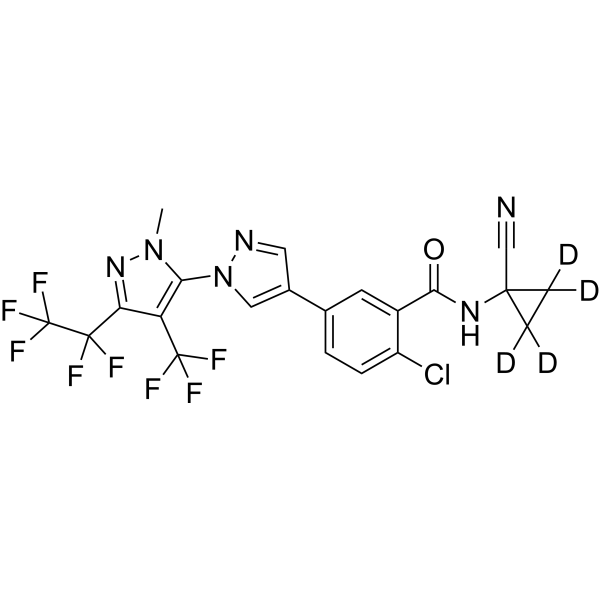 0 ImagesCat. No.: HY-109077STigolaner-d4 is deuterium labeled Tigolaner. Tigolaner (BAY-1272858) acts on γ-aminobutyric acid (GABA) and glutamate-gated chloride channels. Tigolaner has antiparasitic activity.
-
Triclabendazole sulfoxide-13C,d3
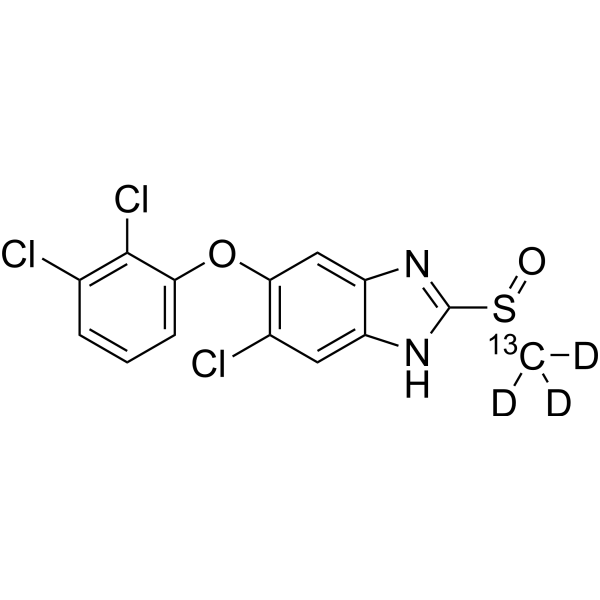 0 ImagesCat. No.: HY-136450S1Synonyms: TCBZ-SO-13C,d3Triclabendazole sulfoxide-13C,d3 is the 13C- and deuterium labeled Triclabendazole sulfoxide. Triclabendazole sulfoxide (TCBZ-SO) is an orally active ABCG2 inhibitor with antiparasitic activity. Triclabendazole sulfoxide inhibits ABCG2-mediated active efflux and ATPase activity. Triclabendazole sulfoxide increases the intracellular accumulation of Mitoxantrone (HY-13502). Triclabendazole sulfoxide reduces the apical-directed transepithelial transport of Nitrofurantoin and Danofloxacin, while increasing their basolateral-directed transepithelial transport. Triclabendazole sulfoxide elevates the plasma levels of sulfasalazine in wild-type mice. Triclabendazole sulfoxide decreases ABCG2-mediated secretion of Nitrofurantoin into milk in wild-type lactating mice. Triclabendazole sulfoxide can be used in the research of insecticidal agents and cancers such as breast cancer.
-
Pyridaben-d13
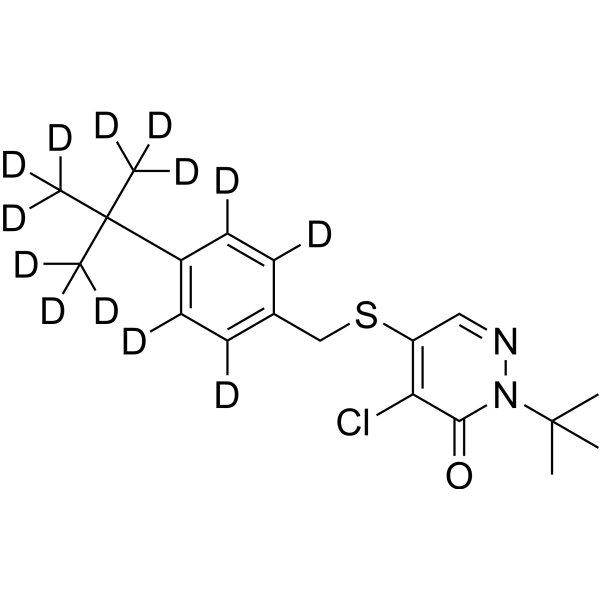 0 ImagesCat. No.: HY-B0817SCAS No.: 2468638-05-1Pyridaben-d13 is the deuterium labeled Pyridaben. Pyridaben is a mitochondrial electron transport inhibitor (METI) acaricide that promotes the formation of damaging oxygen and nitrogen radicals. Pyridaben selectively inhibits complex I (NADH dehydrogenase) with an IC50 value of 2.4 nM (assay sites: rat liver and bovine heart mitochondria). Pyridaben also significantly inhibits rat mitochondrial mtNOS function.
-
Crotamiton-d5
 0 ImagesCat. No.: HY-W743562
-
Lactucin (Standard)
 0 ImagesLactucin (Standard) is the analytical standard of Lactucin. This product is intended for research and analytical applications. Lactucin is an anti-inflammatory agent. Lactucin induces cancer cell apoptosis. Lactucin also shows analgesic, anticancer and antimalarial activities[4].
-
(S)-GSK1379725A
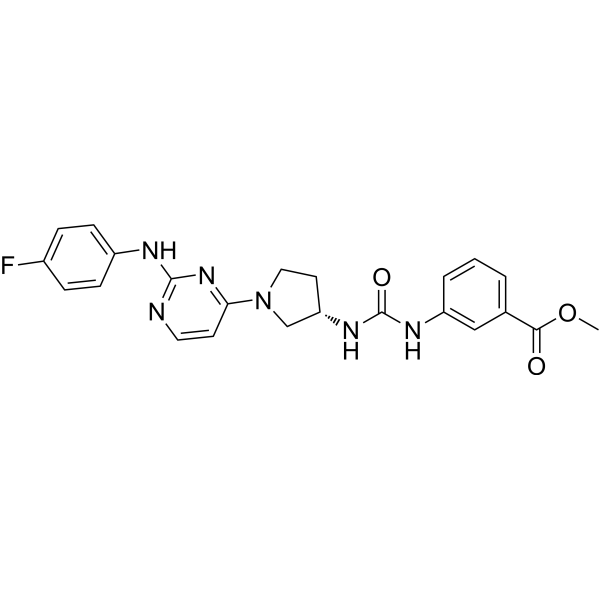 0 ImagesCat. No.: HY-145431CAS No.: 2359618-49-6(S)-GSK1379725A (compound AU1) is a selective bromodomain and PHD finger containing transcription factor (BPTF) bromodomain inhibitor with a Kd of 2.8 μM. (S)-GSK1379725A shows to be selective for BPTF over BRD4 bromodomain. (S)-GSK1379725A shows antimalarial activity.
-
Succinate dehydrogenase-IN-2
 0 ImagesCat. No.: HY-163890CAS No.: 3023681-83-3Succinate dehydrogenase-IN-2 (Compound 12x) is an inhibitor for succinate dehydrogenase (SDH) with an IC50 of 1.22 mg/L. Succinate dehydrogenase-IN-2 exhibits antifungal activity, that inhibits S. sclerotiorum, V. mali, G. graminis, R. solani and B. cinerea with EC50 of 0.52-3.42 mg/L.
-
25-Hydroperoxycycloart-23-en-3β-ol
 0 ImagesCat. No.: HY-N17550CAS No.: 173740-54-025-Hydroperoxycycloart-23-en-3β-ol is an anticancer, antibacterial, and antimalarial agent. 25-Hydroperoxycycloart-23-en-3β-ol can be isolated from Blepharodon nitidum. 25-Hydroperoxycycloart-23-en-3β-ol exhibits anti-Mycobacterium tuberculosis and antileishmanial activities. 25-Hydroperoxycycloart-23-en-3β-ol shows significant cytotoxic activity against a panel of tumor cell lines (large cell lung cancer, melanoma, colon adenocarcinoma, chronic myelogenous leukemia).
-
Imidocarb (Standard)
 0 ImagesPargyline (hydrochloride) (Standard) is the analytical standard of Pargyline (hydrochloride). This product is intended for research and analytical applications. Pargyline hydrochloride is an irreversible monoamine oxidase (MAO) inhibitor with Kis of 13 μM and 0.5 μM for MAO-A and MAO-B, respectively. Pargyline hydrochloride has antihypertensive and anticancer activities. Pargyline (hydrochloride) is a click chemistry reagent, it contains an Alkyne group and can undergo copper-catalyzed azide-alkyne cycloaddition (CuAAc) with molecules containing Azide groups.
-
Mirincamycin hydrochloride
 0 ImagesMirincamycin (hydrochloride) (U-24729 A), a compound used to inhibit malaria, has a protective effect against the early liver stages of Plasmodium but fails to kill dormant liver stages of Plasmodium in a rhesus monkey model.
-
Sulfaquinoxaline-d4
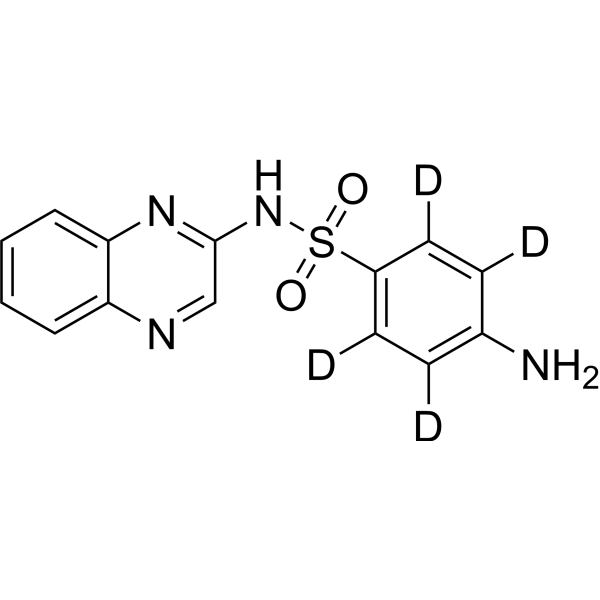 0 ImagesCat. No.: HY-B1282SCAS No.: 1329652-02-9Sulfaquinoxaline-d4 is the deuterium labeled Sulfaquinoxaline. Sulfaquinoxaline is an antimicrobial for veterinary use, with activity against a broad spectrum of Gram-negative and Gram-positive bacteria. Sulfaquinoxaline is used to prevent coccidiosis and bacterial infections.
-
Benzoximate
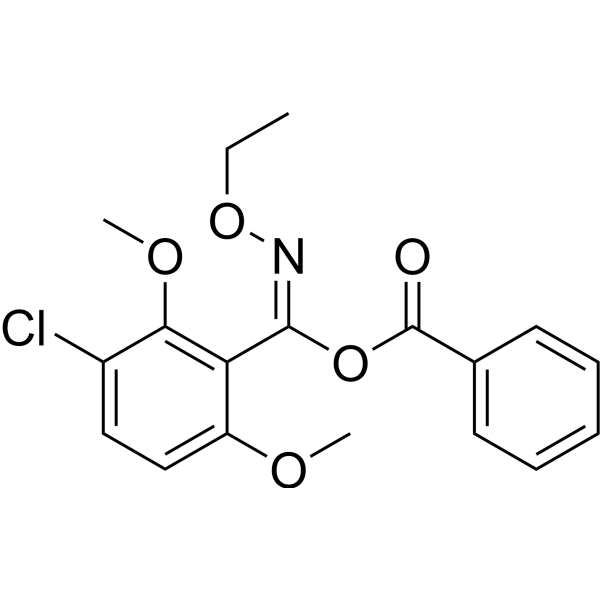 0 ImagesCat. No.: HY-116511CAS No.: 29104-30-1Benzoximate is an acaricide that inhibits fruit tree red spider mite Panonychys ulmi (Koch).
-
SJ000025081
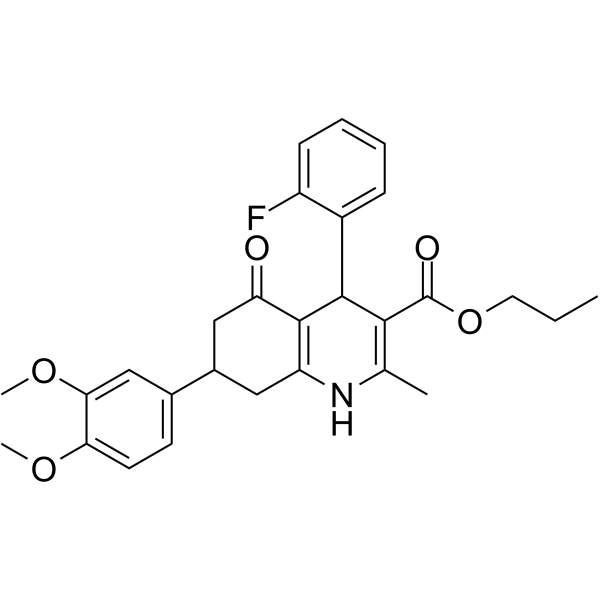 0 ImagesCat. No.: HY-136448CAS No.: 421571-66-6SJ000025081 is a dihydropyridine and acts as a potent antimalarial agent. SJ000025081 results in an obvious suppression of the parasitemia in a murine malaria model infected with P. yoelii.
-
Antimalarial agent 19
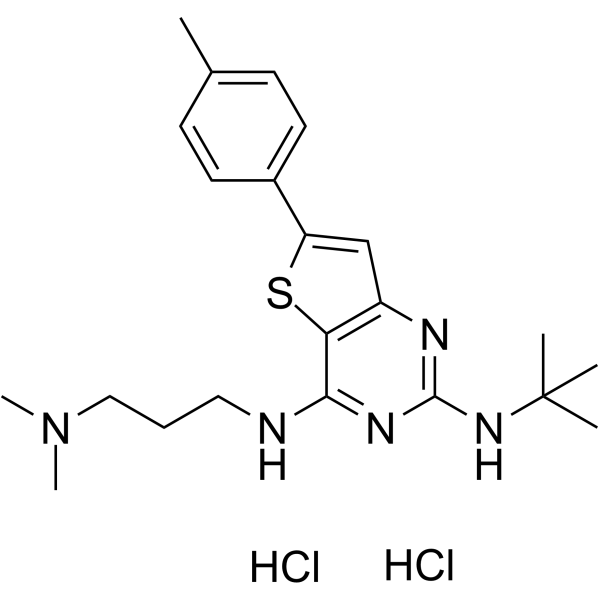 0 ImagesCat. No.: HY-152614CAS No.: 2897630-89-4Antimalarial agent 19 (compound 6e) is an antimalarial active agent. Antimalarial agent 19 has antimalarial activity for the blood stage of P. falciparum K1 and P. berghei with EC50 values of 0.3 µM, 15.3 µM, respectively. Antimalarial agent 19 has good aqueous solubility, intestinal permeability and microsomal stability compared to gamhepathiopine.
-
GSK575594A
 0 ImagesCat. No.: HY-111161CAS No.: 909418-68-4GSK575594A is a modulator of the nicotinic acetylcholine receptor (nAChR) in Ascaris suum. GSK575594A enhances muscle contractions induced by acetylcholine (ACh) by binding to the allosteric binding site between subunits within the transmembrane domain of nAChR. At a concentration of 3 μM, GSK575594A significantly increased the contraction induced by ACh in Ascaris suum (Emax increased from 1.19 g to 1.51 g). GSK575594A may be used in research within the field of antiparasitic studies.
-
Cycloguanil-d6 (hydrochloride)
 0 ImagesCat. No.: HY-12784AS1CAS No.: 2712364-69-5Synonyms: Chlorguanide triazine-d6 hydrochlorideCycloguanil-d6 (Chlorguanide triazine-d6) hydrochloride is the deuterium labeled Cycloguanil hydrochloride (HY-12784A). Cycloguanil hydrochloride is a dihydrofolate reductase (DHFR) inhibitor with an IC50 of 10.8 μM against human DHFR. Cycloguanil hydrochloride blocks the folate metabolic pathway, thereby affecting nucleotide synthesis and interfering with DNA replication. Cycloguanil hydrochloride inhibits DHFR in Plasmodium and is thus used in malaria research. Cycloguanil hydrochloride also potently inhibits DHFR in human cancer cells and blocks the transcriptional activity of STAT3, thereby exhibiting anticancer activity.
-
Antimalarial agent 11
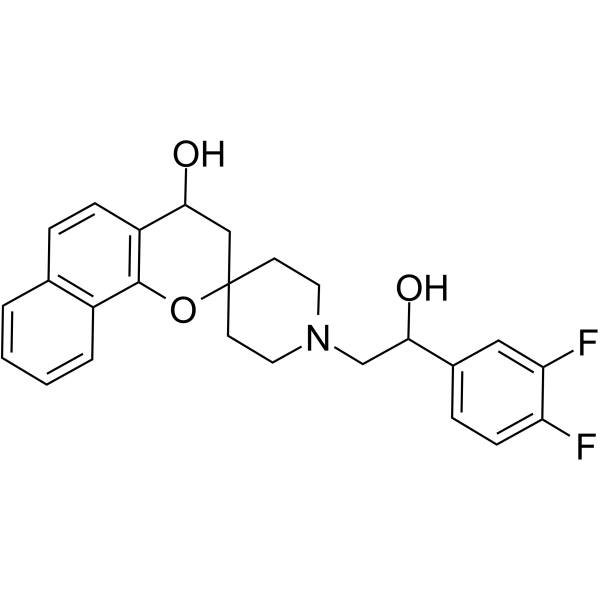 0 ImagesCat. No.: HY-146769CAS No.: 1214454-56-4Antimalarial agent 11 (compound 1), a spirocyclic chromane, is a potent antimalarial agent. Antimalarial agent 11 exhibits excellent potency with an EC50 of 350 nM against the Chloroquine-resistant Dd2 strain. Antimalarial agent 11 has EC50s of 1.48 µM and 1.81 µM against D6 and ARC08-022 strains, respectively.




